
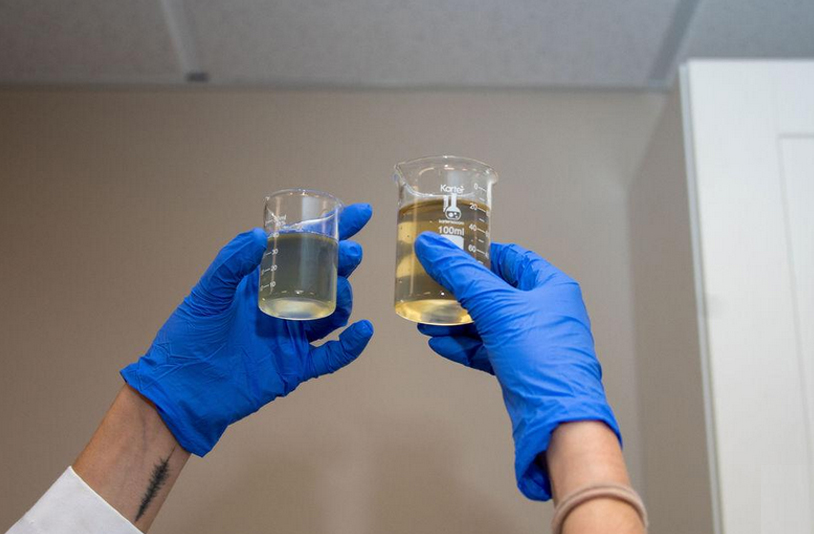
In the United States, wastewater treatment processes vary widely, reflecting different approaches in the remediation of wastewater based on local needs, regulations, and available technologies. Wastewater in America is typically treated in two stages. In the first stage, solids are separated from the wastewater effluent, usually screening out 60% of the suspended solids. In the second stage, the remaining wastewater, containing inorganic material and other suspended solids, is treated using aeration, biological processes, and chemicals such as chlorine, removing about 85% of the suspended solids according to the EPA, so that the water can be recycled.
There are many downsides to the current large scale wastewater management processes that are repeatedly used in the states. The infrastructure and maintenance required are high in energy use and often environmentally polluting. They are not fully equipped to remove certain contaminants found in wastewater and can be damaged by the chemicals that are not removed. As we evolve in science, thousands of new chemicals are discovered each year in the biosolids separated from our wastewater, making the wastewater purification system increasingly insufficient and ever changing. One specific challenge is the management of PCB-contaminated water. PCBs, due to their chemical stability and bioaccumulative properties, are particularly difficult to remove from wastewater. As our understanding of these persistent pollutants evolves, it becomes increasingly clear that current systems need significant improvement. Workers that maintain these treatment plants are directly exposed to unsafe chemicals that emerge from pharmaceuticals, personal care products and microplastics that are becoming more and more prominent in wastewater. The water returned to streams after treatment frequently contains high levels of Total Suspended Solids (TSS) and Biochemical Oxygen Demand (BOD). These elevated levels can lead to algae blooms and other harmful environmental conditions, posing risks to both wildlife and human health.
The solids removed from the wastewater are processed into soil to be packaged and sold as fertilizer, marketed as nutrient-rich and eco-friendly because it’s recycled. However, due to minimal standards and testing, these biosolids contain many unsafe chemicals that end up being reintroduced into the environment and our food supply. Despite being marketed as safe, these fertilizers come with warnings to only use them in personal gardens and to keep animals away due to their toxicity.
There are several biological treatment alternatives that can be used to further improve wastewater purification by breaking down organic matter.
This method uses aerobic bacteria and microorganisms in aeration tanks to digest organic matter in wastewater. The term “activated” refers to the high concentration of microorganisms actively breaking down pollutants. This method is economically advantageous, widely used in large cities, and effective for treating large volumes of wastewater from both industrial and domestic sources. It produces high-quality effluent and has a small land footprint. But it generates large amounts of sludge, which need proper disposal. It can also have high operation costs and lacks flexibility.
Utilizes a membrane with a pore size of less than 1 nm to separate contaminants from water. It is a pressure-driven process with applications in various industries. Some advantages are that it’s less energy intensive compared to reverse osmosis, effectively removes organic and inorganic pollutants, and recovers metals from wastewater. Some limitations are that it’s Prone to fouling, its performance decreases at high temperatures, and the process generates a significant amount of concentrated effluent, potentially leading to environmental pollution.
Is another treatment which Involves microorganisms attached to a filter medium that degrade organic pollutants in wastewater as it trickles down through the medium. It’s low cost, suitable for shock loads, and has low power requirements. It is a simple system with good treatment efficiency and is especially effective in removing gasses like CO2 and H2S. However, the system may clog if not properly maintained, and the biological activity depends on the surface area and porosity of the filter medium.
A treatment system commonly used for small amounts of wastewater, such as lagoons. This natural treatment method uses large, shallow basins where algae and bacteria treat wastewater. It consists of three types of ponds: anaerobic, facultative, and maturation ponds. It is inexpensive, easy to operate, and the treated water can be reused for irrigation. It is particularly effective in tropical climates. It requires large land areas and is less effective in colder climates. The treatment process is also much slower compared to other methods.
A newer wastewater treatment method, involves the use of earthworms, along with microorganisms, to treat wastewater. The wastewater is passed through a filter bed composed of organic material (like compost) and inert materials, where earthworms and microorganisms work together to break down organic pollutants. The earthworms enhance the breakdown of organic matter, increase microbial activity, and improve aeration of the filter bed. This method is particularly effective for treating organic-rich wastewater, such as sewage, agricultural runoff, and industrial effluents. It is known for its low energy and maintenance requirements and ability to produce high-quality effluent.
Vermifiltration distinguishes itself from conventional wastewater management methods through its reliance on natural biological processes involving earthworms and microorganisms. This process is environmentally friendly, unlike traditional treatments, which often depend heavily on chemical additives, vermifiltration minimizes chemical use and produces nutrient-rich worm castings that can be utilized as high-quality organic fertilizers. This creates a circular economic model where waste is transformed into valuable by-products, supporting sustainable agriculture and reducing the need for synthetic fertilizers. It is also suitable for decentralized wastewater treatment systems. Unlike the Activated Sludge or Membrane Bioreactor methods, which rely heavily on aerobic bacteria and mechanical aeration, vermifiltration uses a natural process involving earthworms to achieve similar results. While Trickling Filtration also involves biofilms of microorganisms, it doesn’t use earthworms, making vermifiltration distinct in its approach to wastewater treatment.
Furthermore, vermifiltration offers opportunities for community engagement and education about sustainable waste management practices, enhancing environmental awareness and stewardship. It is also suitable for decentralized wastewater treatment systems.