
Kennewick, WA — Perca, a trailblazer in sustainable wastewater management using biomimicry, garnered significant attention at the recent American Public Works Association (APWA) conference held in Kennewick. Invited by the APWA’s Sustainability Committee, Perca’s Chief Science Officer Dr. George Damoff and Director of Research and Development Sierra Smith delivered a compelling presentation on their innovative use of worm beds to enhance wastewater treatment efficacy.
The conference attracted a diverse audience, including representatives from municipalities, industrial clients, vendors, and government officials. Attendees were eager to learn about Perca’s success in employing vermifiltration techniques, which utilize earthworms to remove contaminants from wastewater. Dr. Damoff emphasized the dual capabilities of their system, stating, “Our research has shown that worms can effectively reduce standard pollutants like biological oxygen demand (BOD) and total suspended solids (TSS), while also sequestering and potentially breaking down more hazardous chemicals.”
The presentation highlighted how traditional wastewater treatment methods often fall short in addressing toxic substances. Chemicals like PCBs and PFAS are currently being explored and researched by Perca’s Research and Development team and some contaminants are showing significant reduction rates in the Perca vermifiltration bed. Perca’s approach not only improves the treatment process but also enhances the sustainability of wastewater management. “We aim to transform waste into a resource,” Smith explained, showcasing the potential benefits of integrating vermifiltration into existing systems. The Perca system addresses the green remediation technology concept put forward by the Environmental Protection Agency through achieving the three goals set forth: economically viable, environmentally conscious, and improved social and community impact. As Smith stated in the presentation, “Perca is the nexus of these three components which is what makes the technology such a powerful tool in sustainable waste management.”
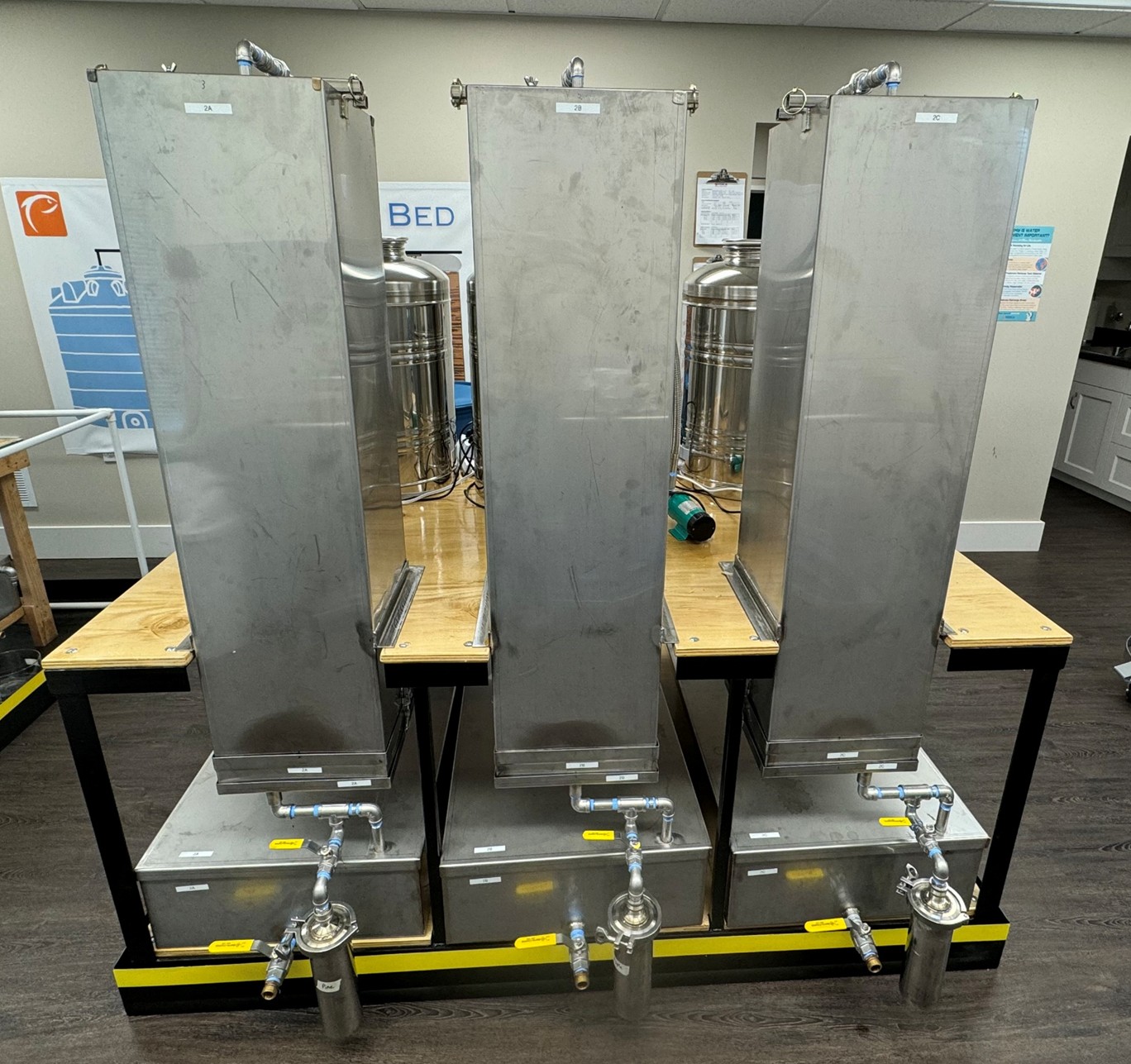
Following the presentation, Perca’s booth became a focal point of interest. Attendees were drawn to the live-action demonstration of the Drilo2 worm bed model, which provided a vivid illustration of how vermifiltration works in real-time. Many visitors took the opportunity to pick up free models of worms to explore the technology further within their own municipalities.
The enthusiasm surrounding Perca’s technology reflects a broader trend among public works departments seeking innovative solutions to meet stringent environmental regulations. The ability of earthworms to consume organic matter and produce nutrient-rich castings presents a unique opportunity for municipalities aiming to enhance their waste water treatment processes sustainably.
Several attendees expressed interest in conducting pilot programs to assess the effectiveness of Perca’s worm beds in their facilities. “The feedback has been overwhelmingly positive,” noted Dr. Damoff. “Cities are increasingly eager to implement sustainable technologies that not only address regulatory challenges but also benefit their communities.”
Perca’s participation in the APWA conference underscores the importance of collaboration among municipalities, researchers, and industry leaders to tackle pressing environmental issues. The dialogue generated at the event highlighted the potential for sustainable practices to reshape the landscape of wastewater management.
As the City of Walla Walla continues to advocate for eco-friendly initiatives, the collaboration showcased at the conference signals a promising shift toward innovative solutions in public works. Perca’s pioneering approach to vermifiltration could pave the way for cleaner water and healthier ecosystems, marking a significant step forward in the ongoing quest for sustainable environmental practices.
With growing interest in their technology, Perca is poised to make a lasting impact on wastewater treatment, demonstrating how nature-based solutions can play a crucial role in addressing the challenges of modern waste management.
Categories
Tag